At 826 National, we’ve had the incredible opportunity to collaborate and work with amazing writers, many whose works continue to be banned and challenged across the country. To honor and celebrate these writers, we’re sharing those and many others featured in the American Library Association’s list of Top 10 Most Challenged Books of 2024.
The books featured below amplify diverse voices and confront some of society’s hardest realities. Instead of looking away, they tell the truth with honesty and courage, inviting readers to face injustice, question norms, and see the world through someone else’s eyes. At the same time, these stories highlight resilience, love, and the search for belonging. Each book reminds us that storytelling is both a mirror and a lifeline that reflects our struggles while offering hope, strength, and connection.
Fight against book bans by reading those most challenged in 2024. Then, share it with your friends, your family, your community – and the entire world.
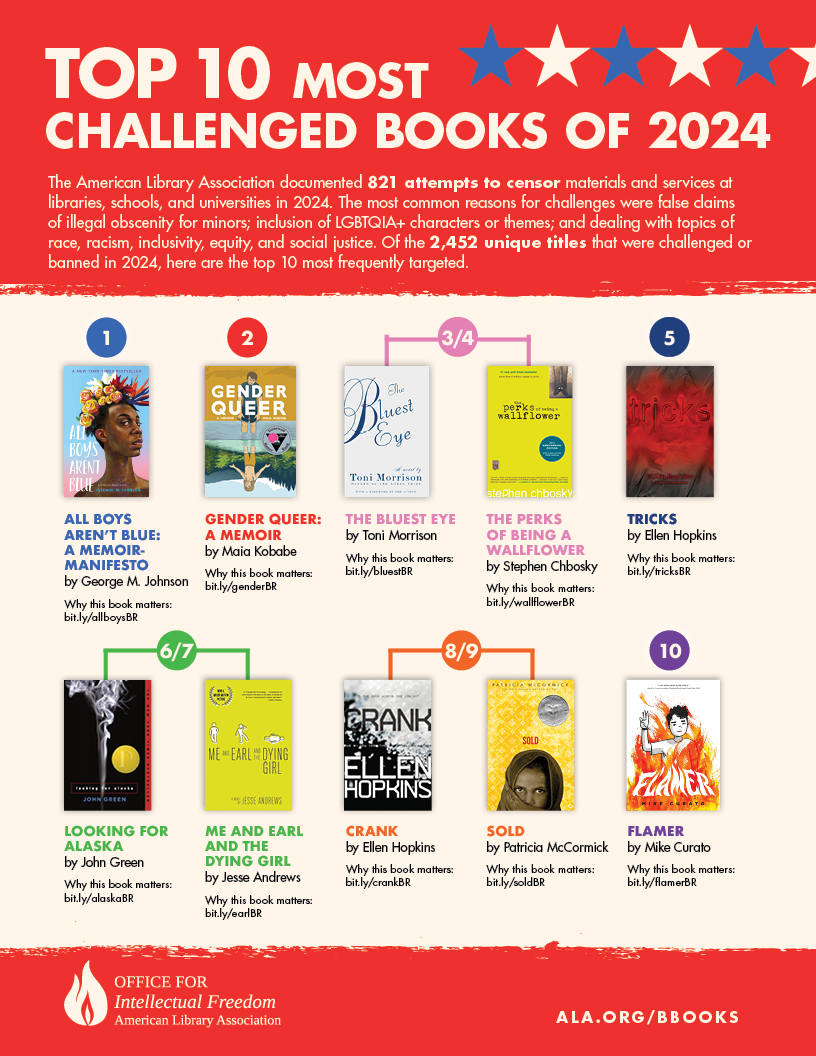
All Boys Aren’t Blue: A Memoir Manifesto by George M. Johnson
George M. Johnson’s memoir blends personal narrative and social commentary to illuminate the realities of growing up Black and queer in America. From first crushes to family bonds and painful experiences with bullying and assault, Johnson shares candid stories that resonate deeply. Each chapter serves as both testimony and guide, offering reflections on masculinity, queerness, and resilience. The book also weaves in broader discussions of systemic racism and homophobia, making it both deeply personal and socially urgent. Through honesty and vulnerability, Johnson provides a roadmap for young readers navigating their identities and a call to action for all to create more inclusive communities.
Gender Queer: A Memoir by Maia Kobabe
In this graphic memoir, Maia Kobabe explores the journey of understanding and embracing a nonbinary, asexual identity. Through illustrations and storytelling, Kobabe captures the confusion, joy, and challenges of questioning gender and sexuality. The memoir navigates childhood experiences, the search for language to describe identity, and the importance of self-expression. Alongside personal experiences, it also serves as an accessible resource for those seeking to understand queer and nonbinary identities. Tender, informative, and often humorous, Gender Queer is both a coming-of-age story and a valuable tool for empathy and education.
The Bluest Eye by Toni Marrison
Toni Morrison’s debut novel tells the devastating story of Pecola Breedlove, a young Black girl in 1940s Ohio who longs for blue eyes, believing they will bring beauty, love, and acceptance. The novel explores how racism, poverty, and rigid beauty standards poison communities and families, leaving generational scars. Through multiple perspectives, Morrison highlights the destructive power of internalized oppression and societal neglect. Pecola’s heartbreaking descent into despair forces readers to confront uncomfortable truths about race and privilege. Lyrical, haunting, and unflinching, the book challenges notions of beauty while illuminating the resilience and vulnerability of those most marginalized.
The Perks Of Being A Wallflower by Stephen Chbosky
Told through letters to an anonymous recipient, the novel follows Charlie, a shy and introspective teenager beginning high school. As he navigates friendships, first love, and family struggles, Charlie discovers both the pain and joy of growing up. His relationships with step-siblings Patrick and Sam open his world to new experiences and truths about himself. The story also delves into themes of trauma, mental health, and finding belonging in unexpected places. Honest, heartfelt, and timeless, Chbosky’s novel captures the universal search for connection during adolescence.
Tricks by Ellen Hopkins
Written in free verse, Tricks follows five teenagers from different backgrounds whose paths lead them into the world of sex work. Each character faces struggles with family rejection, heartbreak, abuse, or poverty that push them toward dangerous choices. Hopkins gives each voice authenticity and emotional depth, weaving their stories into a raw portrait of survival. The novel confronts readers with the realities of exploitation, addiction, and the search for love in unsafe places. Gritty and unflinching, it asks how society fails vulnerable youth while also highlighting their resilience.
The Hate U Give by Angie Thomas
Starr Carter lives between two worlds: her poor Black neighborhood and the wealthy prep school she attends. Her life is upended when she witnesses the police shooting of her unarmed best friend, Khalil. As the sole witness, Starr faces pressure from her community, activists, and the media to speak out. The novel explores systemic racism, police brutality, and the complexities of identity and activism. Through Starr’s journey, Thomas shows the importance of courage, truth, and finding one’s voice in the face of injustice.
Looking For Alaska by John Green
The story follows Miles “Pudge” Halter, a teenager fascinated by famous last words, who enrolls in a boarding school searching for meaning. There he meets the bold and enigmatic Alaska Young, whose charisma and unpredictability change his life. As Miles forms friendships and experiences love, mischief, and heartbreak, he confronts profound questions about life and loss. The novel is divided into “before” and “after,” underscoring how tragedy reshapes the characters’ outlooks. With humor and poignancy, Green examines the complexities of adolescence, grief, and the search for belonging.
Me and Earl and The Dying Girl by Jesse Andrews
Greg Gaines, a socially awkward high schooler, just wants to coast unnoticed through senior year by making goofy films with his friend Earl. His plans change when his mom insists he befriends Rachel, a classmate recently diagnosed with leukemia. What begins as an awkward arrangement slowly grows into an unconventional friendship. The story is full of humor, self-deprecation, and heartfelt honesty about how teens deal with illness and mortality. Unlike traditional “sick lit,” the novel avoids sentimentality while still exploring empathy, connection, and the messiness of growing up.
Crank by Ellen Hopkins
Inspired by her own daughter’s story, Ellen Hopkins writes in verse about Kristina, a teenage girl whose life spirals after experimenting with meth. Kristina’s alter ego, “Bree,” emerges as she is drawn deeper into addiction, rebellion, and risky relationships. The novel vividly captures the highs and devastating lows of substance abuse. Hopkins does not shy away from the impact on family, self-identity, and future dreams. Stark, emotional, and urgent, Crank is both a cautionary tale and an intimate portrait of addiction’s grip.
Sold by Patricia McCormick
Written in a series of vignettes, Sold tells the story of Lakshmi, a thirteen-year-old girl from Nepal who is sold into sexual slavery in India. Believing she is going to work as a maid to help her impoverished family, Lakshmi instead finds herself trapped in a brothel. McCormick’s spare, poetic prose reflects Lakshmi’s innocence and resilience while revealing the brutal realities of human trafficking. Despite unimaginable suffering, Lakshmi never loses hope for freedom. The novel is a haunting and powerful call for awareness and change.
Flamer by Mike Curato
Set at a summer Boy Scout camp in the 1990s, Flamer follows Aiden Navarro, a biracial Filipino-American teen struggling with identity, bullying, and his growing awareness of being gay. Surrounded by toxic masculinity and homophobia, Aiden feels isolated and ashamed of who he is. The graphic novel combines text and illustration to show his internal battles with self-hatred, faith, and belonging. Despite the darkness he faces, Aiden’s story ultimately becomes one of resilience and self-acceptance. Honest, raw, and relatable, it reflects the challenges many LGBTQ+ teens face in discovering themselves.
Let us know your favorite banned books and authors online using #bannedbooksweek.
