The 826 Write To Thrive Fund
826 National is addressing the youth mental health crisis with a first-of-its-kind literacy mental health fund.
The 826 Write to Thrive Fund is designed to build a movement at the intersection of writing and youth mental health
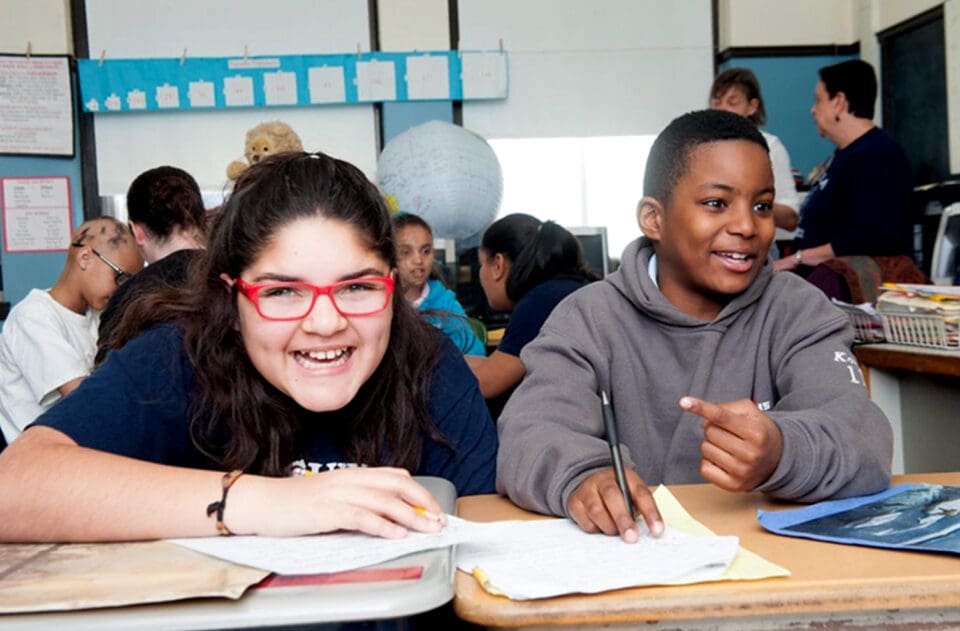
826 National invites eligible youth-serving organizations and schools to apply for grants that provide access to our writing and SEL curriculum and training, strengthening their capacity to support young people’s creative expression and well-being.
Scaling an evidence-based approach to youth mental health through writing
Today, one in three children in the United States struggles with a mental health challenge, but only 20% receive supportive care. More than 40% of teens report feeling persistently sad or hopeless. For children of color, the suicide rate is nearly twice that of their peers.* Schools and community spaces are struggling to meet the rising need for mental health support. Yet amid this crisis, one powerful tool is too often overlooked: writing.
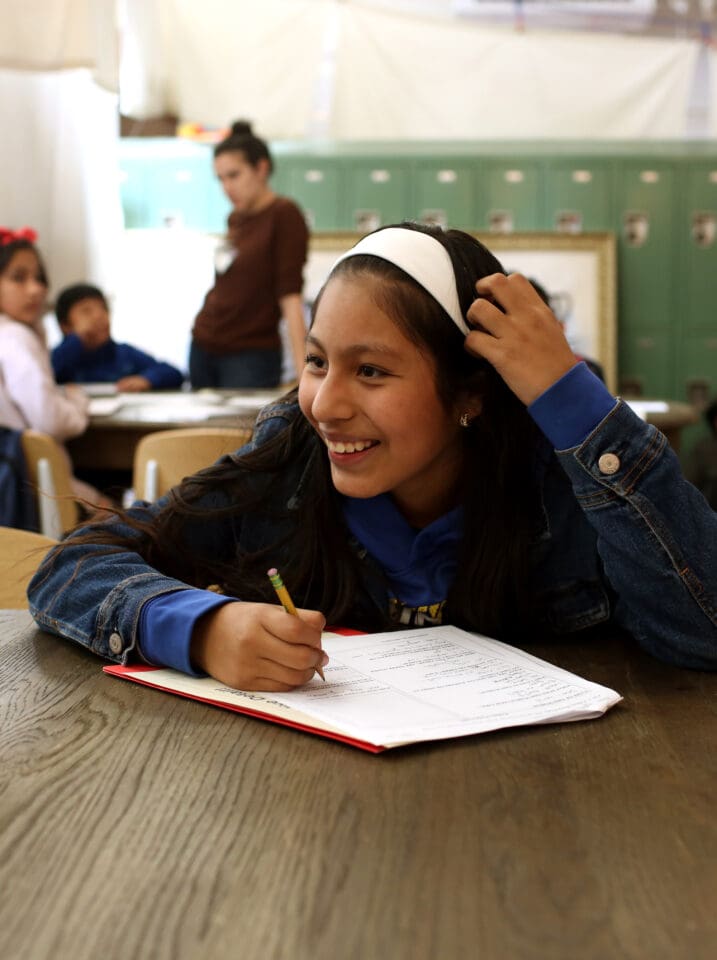


America’s youth are powerful, brilliant, and full of potential. They are also in crisis.
Across the country, students are navigating trauma, anxiety, and loss—much of it unspoken.
The Write to Thrive Fund was created to invest in youth writing as prevention. By uniting research, practice, and philanthropy, 826 National is building a new model for integrating writing and mental health support in schools and community programs nationwide.
Writing is more than expression — it’s evidence-based intervention. Studies show that structured writing can reduce stress, improve mood, and build cognitive flexibility. Students who write regularly report higher resilience, stronger social-emotional skills, and greater engagement in school.
The Write to Thrive Fund brings these proven benefits to scale.

826 authors are courageously and unapologetically filling in the literary gaps of yesterday, and demanding that we explore new topics and voices in this sociocultural moment. They are writing the poems that they want to read, and what’s more, writing poems we all should be reading.
Led by 826 National, the country’s largest youth writing network, the fund invests in programs that make writing accessible as a tool for emotional growth and academic success
Community-based organizations and schools, as places where young people already gather and feel seen, are uniquely positioned to bridge the gap in mental -health support. By transforming these spaces into creative hubs, we can empower underserved youth to harness their voices, tell their stories, grow creatively, and develop emotional resilience.
This initiative expands a proven model—tested across 826’s network of more than 900,000 students—and harnesses the power of youth writing to create a scalable, impactful response to the mental health challenges facing today’s young people.
The Write to Thrive Fund will:



Writing has proven to be a powerful tool for addressing this crisis
Research shows that writing is a powerful protective factor for youth mental health.
When students write, they move from the survival brain—the part focused on fear and protection—to the learning brain, which is open to imagination, empathy, and growth.
Writing programs such as those offered by 826 have shown significant impact: 94% of participating students in the 826 Network’s classrooms and writing centers report better understanding of themselves and their lives, and 96% of educators see improvements in students’ social and emotional skills. Moreover, in 826 Network classrooms and writing centers, 93% of students reported feeling supported and safe—conditions proven to strengthen mental well-being.
What’s more, students showed a 5.3% increase in empathy and perspective-taking, as measured through their writing.
That’s not just academic progress. That’s emotional literacy.
Writing helps young people author their way through emotion and into agency:


The mental-health crisis among youth demands innovation that is both human and scalable
By combining creative learning with social and emotional development, writing can serve as a cost-effective, adaptable intervention—one that educators can deliver without requiring additional clinical staff.
The Write to Thrive Fund aligns with growing national priorities around student well-being, preventive mental health care, and evidence-based learning strategies.

Today’s youth mental health landscape requires community-based organizations to consider the mental health needs of the young members engaged in their programs. Nonprofit leaders play a critical role in helping young people manage complex emotions and thrive. Providing youth with preventative interventions like writing can help. However, building initiatives to protect youth emotional well-being is hard work and calls for resources and support. 826 National’s Write to Thrive Fund is providing this support.

Help grow this first‑of‑its‑kind national effort
The Write to Thrive Fund invites philanthropic, research, and public-sector partners to help grow this first-of-its-kind national effort.
Together, we can make writing a standard tool for mental-health support in education — improving well-being, learning, and life outcomes for millions of young people.
Grants are $20,000 in general operating support. The acceptance of the grant serves as a commitment to run the program as described.
All grantee partner sites will facilitate a series of writing workshops that incorporate these elements:
- Community Building: Incorporate activities and prompts that foster connection, establish group norms, and create a supportive space for every young writer.
- Reflective Writing: Offer prompts that invite students to explore their feelings, perspectives, and experiences in their own way, cultivating self-awareness and curiosity about themselves and the world around them.
- Emotional Expression: Guide students to consider the power and possibility of their emotions—the highs, the lows, and everything in between—and how writing can help make sense of it all.
- Creative Exploration: Encourage imaginative writing that celebrates both the stories students carry and the worlds they can create, using writing as a form of play, invention, and possibility.
- Journaling: Introduce a consistent journaling practice that allows students to show up as their authentic selves, explore identity, and process emotions in real time.
- Creative Care Plan: Support students in developing their own “creative care plan,” a personal map of the prompts, practices, and creative spaces that felt most supportive and a plan to continue writing and wellness beyond the program.
Write to Thrive workshops are designed with accessibility and adaptability at their core, making them a natural fit for out-of-school and after-school settings. The writing experiences build sequentially, engaging both creative and reflective skills while offering flexibility to align with partner programs and student interests. Each lesson supports diverse learning styles and lived experiences and includes a variety of activities to sustain interest and deepen connection. The lessons can be approached in multiple sequences, and partners may choose from different options to best fit their program design and students’ interests.
Each session is designed for groups of fifteen to thirty students but can be adapted for larger classes or smaller circles. Sessions can be led by a single facilitator or educator, though a higher adult-to-student ratio is ideal where possible. In addition to providing facilitator resources for all sessions, 826 National will also provide a brief curriculum guide along with training sessions on best practices for leading writing sessions that center care, creativity, and emotional well-being. While youth programming experience is recommended for facilitators, no formal background in writing or mental health is required. What matters most is an openness to listen, to create brave and safe spaces for young people, and to make space for their voices to grow.
This grant opportunity is open to youth-serving organizations, such as schools and out-of-school-time providers.
826 National seeks to partner with organizations that primarily serve low-income, BIPOC, and/or English Language Learner (ELL) students. On the application, we’ll ask how you measure and understand your students’ demographics so we can learn more about the community your serve.
We are prioritizing applicants located in communities without an existing 826 chapter. Organizations and schools in Boston, Chicago, Detroit/Ann Arbor/Ypsilanti, Los Angeles, Minneapolis/St. Paul, New Orleans, New York City, San Francisco, and Washington, D.C. will not be considered for this opportunity. We especially encourage applications from organizations in rural, urban, and tribal communities.
Students participating in the program should be in GRADES 4–12 (currently enrolled, or rising if participating in summer 2026). While participating organizations may extend resources to younger learners in their programs, only students in grades 4–12 will count as official program participants.
- 8 student programming sessions: Grantee partners will lead eight Write to Thrive sessions with their student group(s), each approximately 60 minutes.
- Participation in a shared learning cohort: Grantees will join a shared learning cohort to take part in coordinated training,convene virtually to exchange best practices and insights, receive program-support guidance from 826 National and experienced youth-development practitioners, and build a supportive community of practice rooted in collective learning.
- 4 cohort gatherings: Facilitators will participate in four 2-hour cohort gatherings, with the first two taking place in February. These gatherings will offer tools, models, and shared learning that support facilitators as they prepare for and teach the Write to Thrive writing lessons.
- Reflection through surveys: Facilitator and student surveys will be provided—and required—to support reflection on what worked well and where we can grow. These insights help us strengthen the experience for young people and ensure the work remains meaningful, joyful, and grounded in their needs.
- Sharing student writing: Partners will share a selection of final student pieces with 826 National so we can uplift and celebrate young people’s voices. We will also provide a template for creating an optional local student publication for partners who want to bring their students’ writing to a wider audience. Sharing and showcasing young people’s work can spark pride, amplify their confidence as writers, and reinforce the power of their words.
Programs supported by this grant must directly engage at least 100 students consistently through this writing initiative during the grant period (February 2-August 31, 2026). This number reflects students participating in the supported Write to Thrive component specifically, not overall program enrollment. We’re seeking partners who can reach a meaningful number of young writers through creative, engaging, and accessible programming.
- The number of students who will participate
- Who the program serves: Organizations that primarily serve low-income, BIPOC, and/or English Language Learner (ELL) students
- Organizations in communities or districts with limited access to joyful, high-quality writing opportunities for young people. We prioritize organizations that open doors for young people and create spaces where their voices and ideas can thrive.
- Grant Application Period: December 1–January 21, 2025
- Award Notifications: By February 1, 2026
- Cohort Trainings:
- February 11, 12:00–2:00 PT | 2:00–4:00 CT | 3:00–5:00 ET
- February 25, 12:00–2:00 PT | 2:00–4:00 CT | 3:00–5:00 ET
- April 22 (orgs implementing programming in spring 2026), 12:00–2:00 PT | 2:00–4:00 CT | 3:00–5:00 ET
- June 24 (orgs implementing programming in summer 2026), 12:00–2:00 PT | 2:00–4:00 CT | 3:00–5:00 ET
- August 26, 12:00–2:00 PT | 2:00–4:00 CT | 3:00–5:00 ET
- Program Implementation: March through June and/or during summer 2026
Submit an application, and view the application questions at the links below.
About 826 National
For over two decades, 826 National has advanced a data-driven, equity-centered approach to writing education that builds skills, confidence, and connection. Among students who have participated in 826 programs, 95% report improved writing ability, and 93% say the programs create a culture of creativity and belonging.
With a nationwide network and a track record of measurable outcomes, 826 National is distinctly situated to pilot, evaluate, and scale this model for youth mental health through writing.
The Write to Thrive Fund is a national initiative of 826 National, advancing scalable, evidence-based solutions at the intersection of learning and mental health.

Announcement
Learn More About 826 National's Write to Thrive Fund
826 National is addressing the youth mental health crisis with a first-of-its-kind literacy mental health fund providing eligible youth-serving organizations with grants, training, and tools that integrate writing as mental health support.